Basics · 5 min read
What Is a Japanese Head Spa?
From the warm-water cleanse to the scalp massage, here is how a session actually unfolds.
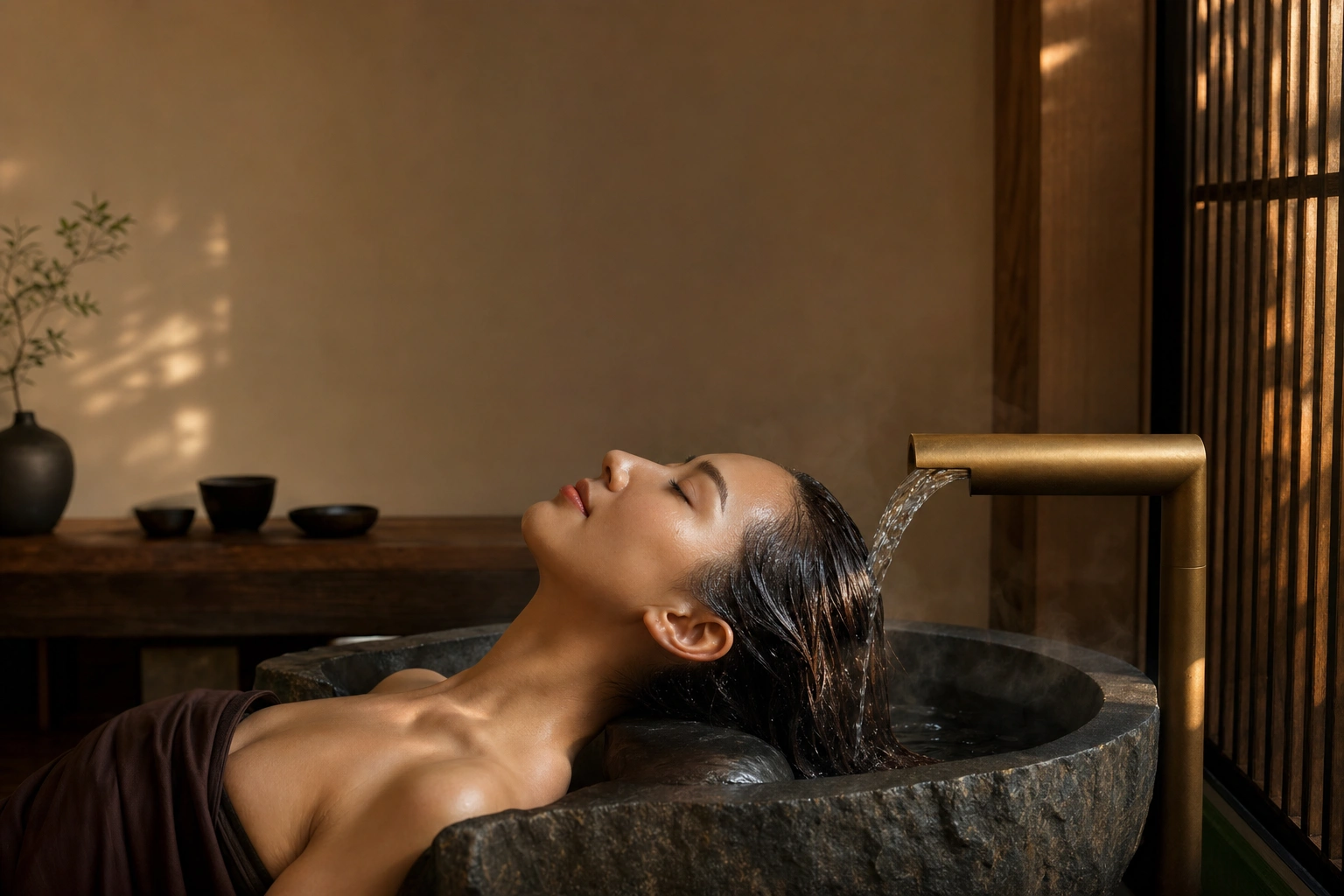
A Japanese head spa is a dedicated scalp-care ritual, not an add-on tacked onto a haircut. The session centers the scalp itself — circulation, tension release, and a deep cleanse — with hair styling treated as an afterthought rather than the point.
What actually happens in a session
Most sessions follow a similar shape, though the order and emphasis vary by spa:
- Consultation — a quick check on scalp condition, sensitivities, and what you’re hoping to get out of the visit.
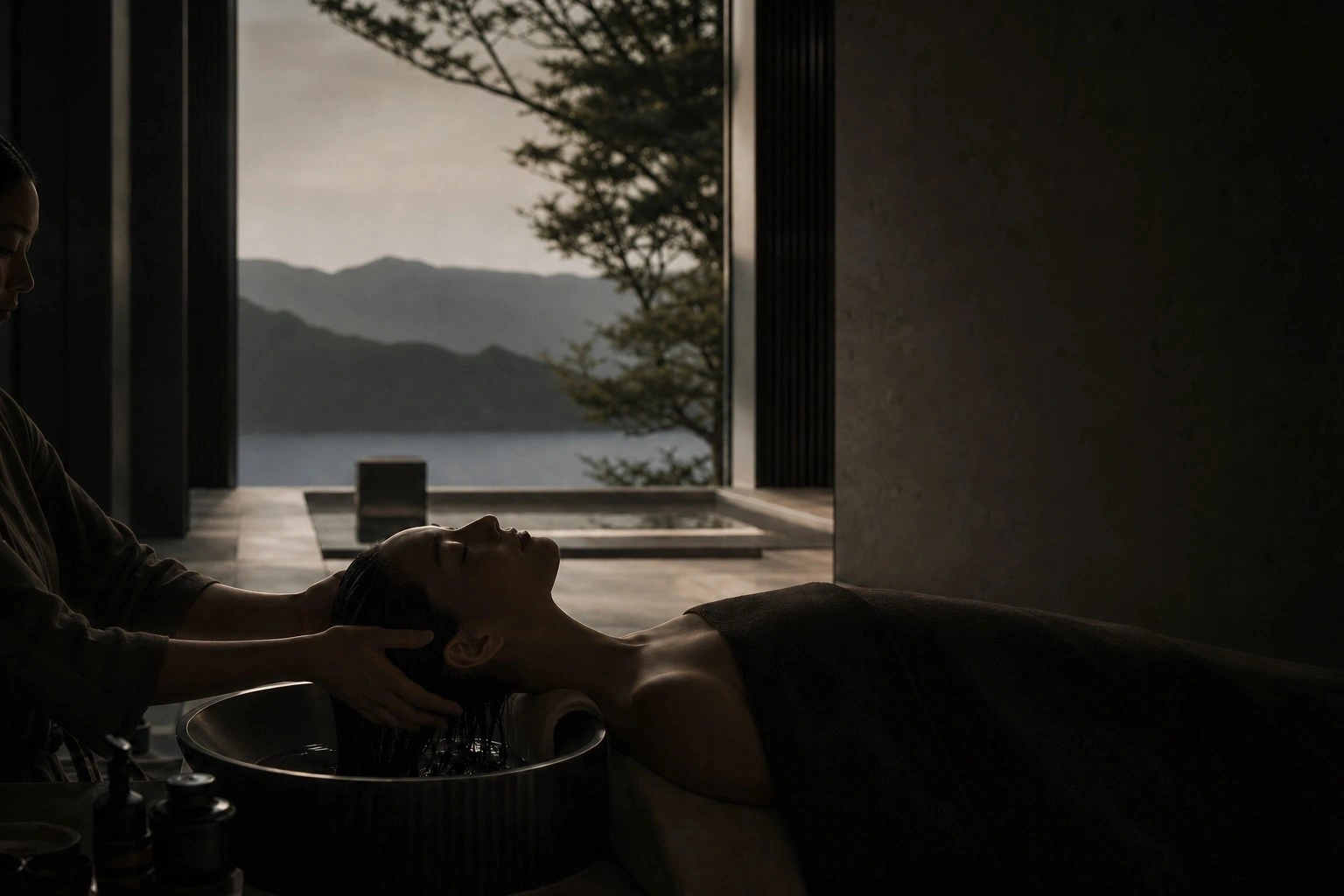
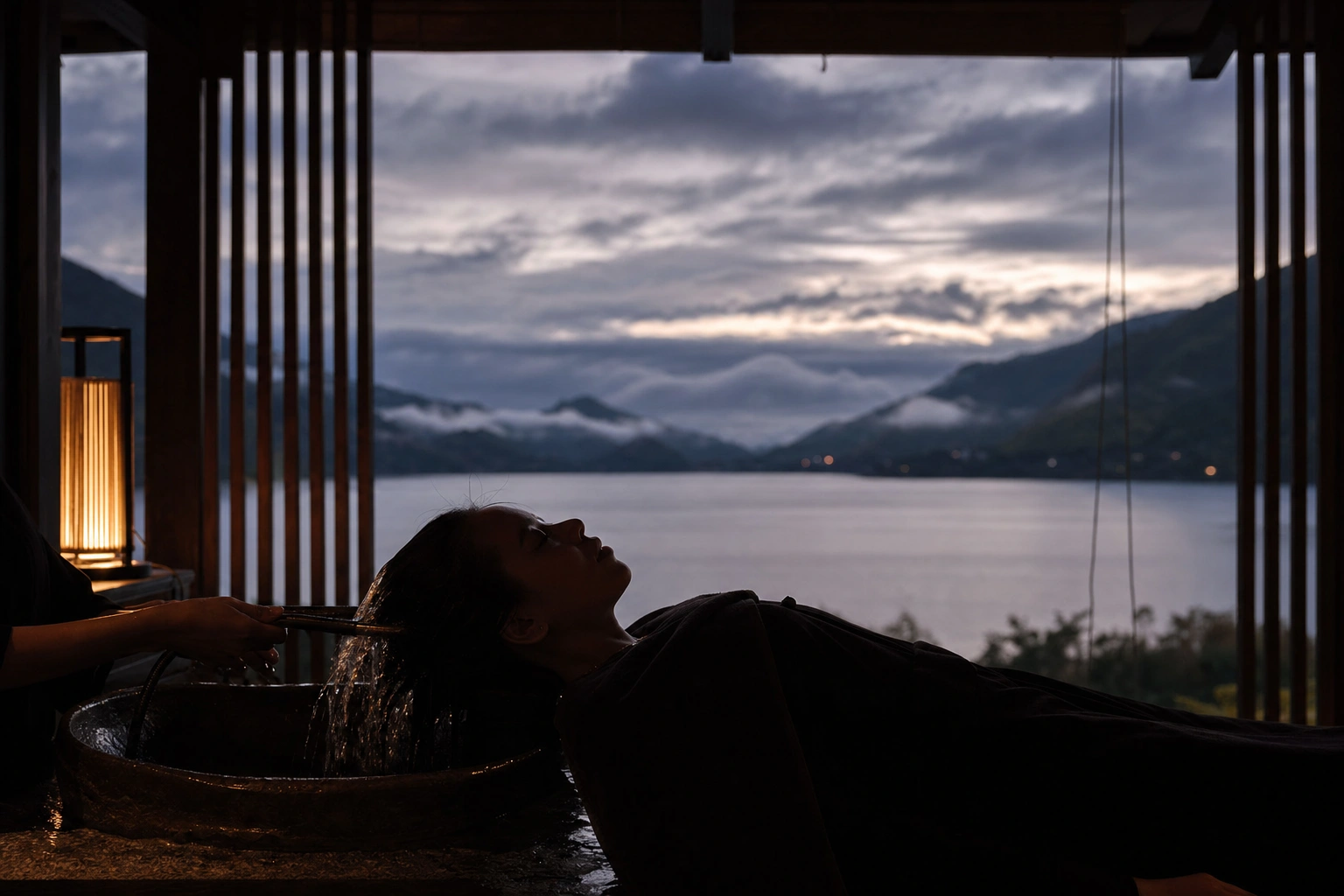
- Warm-water cleanse — a slow, thorough rinse that’s closer to a spa treatment than a shampoo at the sink.
- Scalp massage — the core of the ritual; pressure-point work meant to release tension and improve circulation.
- Treatment mask or serum — targeted to your scalp’s condition (dry, oily, sensitive, color-treated).
- Finish — a blow-dry or air-dry finish, depending on the spa’s
finish_type.
Why people book one
The draw is equal parts wellness and hair health: a tense scalp can contribute to headaches and slower hair growth, and a proper cleanse clears product buildup that a regular shower often misses. Many guests describe the massage portion alone as worth the visit.
What to expect on your first visit
Don’t expect a rushed appointment — a full session is closer to a massage-therapy visit than a salon stop. Most spas appreciate a few minutes of quiet at the start to talk through any scalp sensitivities before the water starts running.
Asked & answered
How long does a head-spa session take?
Most full sessions run 60–90 minutes, with express add-ons closer to 30.
Is a head spa the same as a scalp treatment at a salon?
Not quite — a dedicated head spa centers the scalp ritual rather than treating it as an add-on.
Before you book
Quality varies more than the photos suggest. Every listing in the Atlas is scored on technique, sanctuary, hygiene, and value — independently, never paid.
Further reading