Basics · 6 min read
Japanese vs. Korean Head Spa: The Definitive Comparison
One is a sensory ritual, the other a scalp-care clinic. Here is what each session looks like and who each suits.
Both traditions treat the scalp as the destination, but they answer different questions. A Japanese head spa asks how deeply can you rest; a Korean head spa asks what does your scalp need. Knowing which question you are bringing is most of the decision.
The shared spine
Strip the branding and both formats follow the same skeleton — consultation, cleanse, massage, treatment, finish — covered step by step in what is a head spa. The differences live in emphasis: what the session opens with, where the time goes, and what you leave holding.
The Japanese approach: the ritual
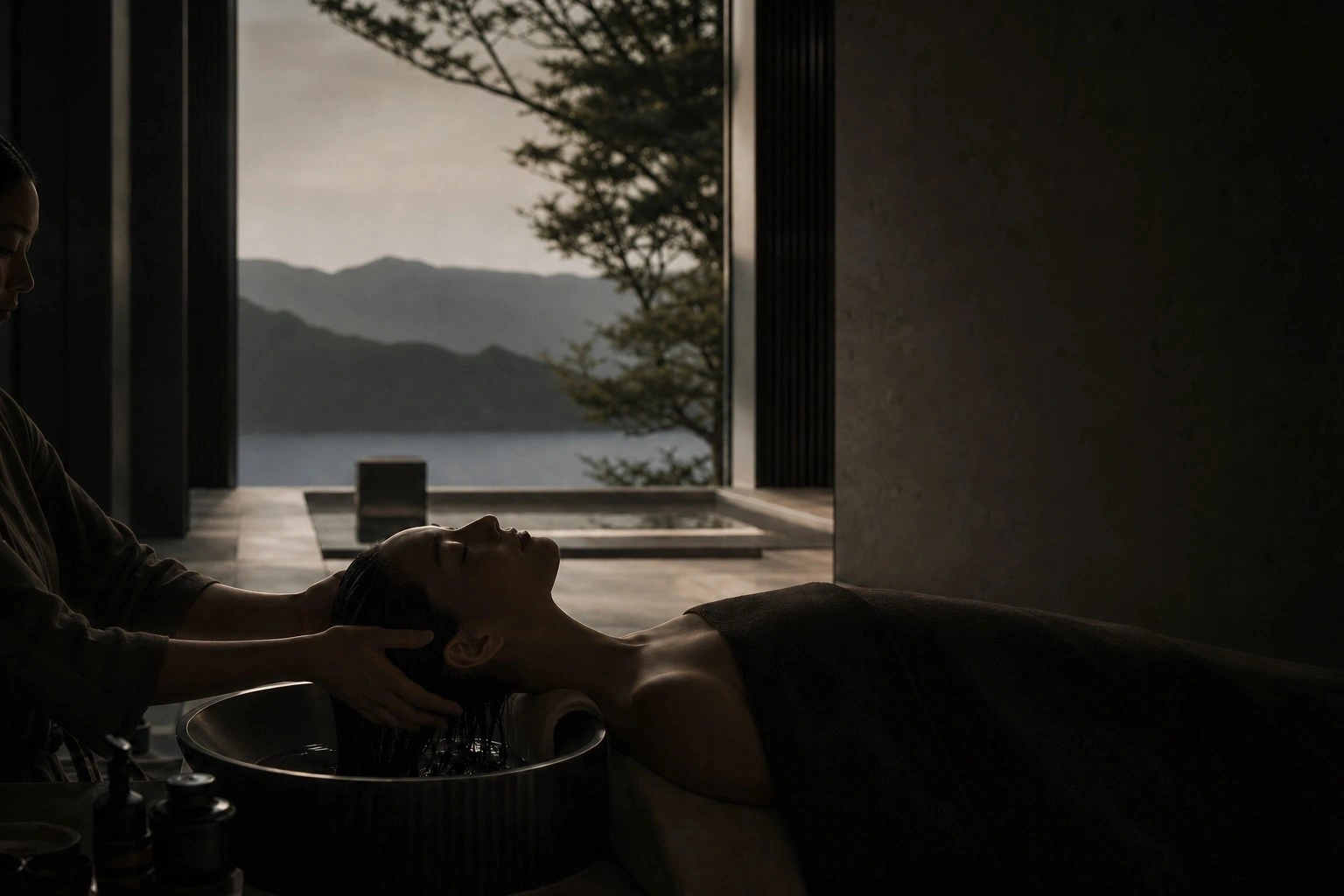
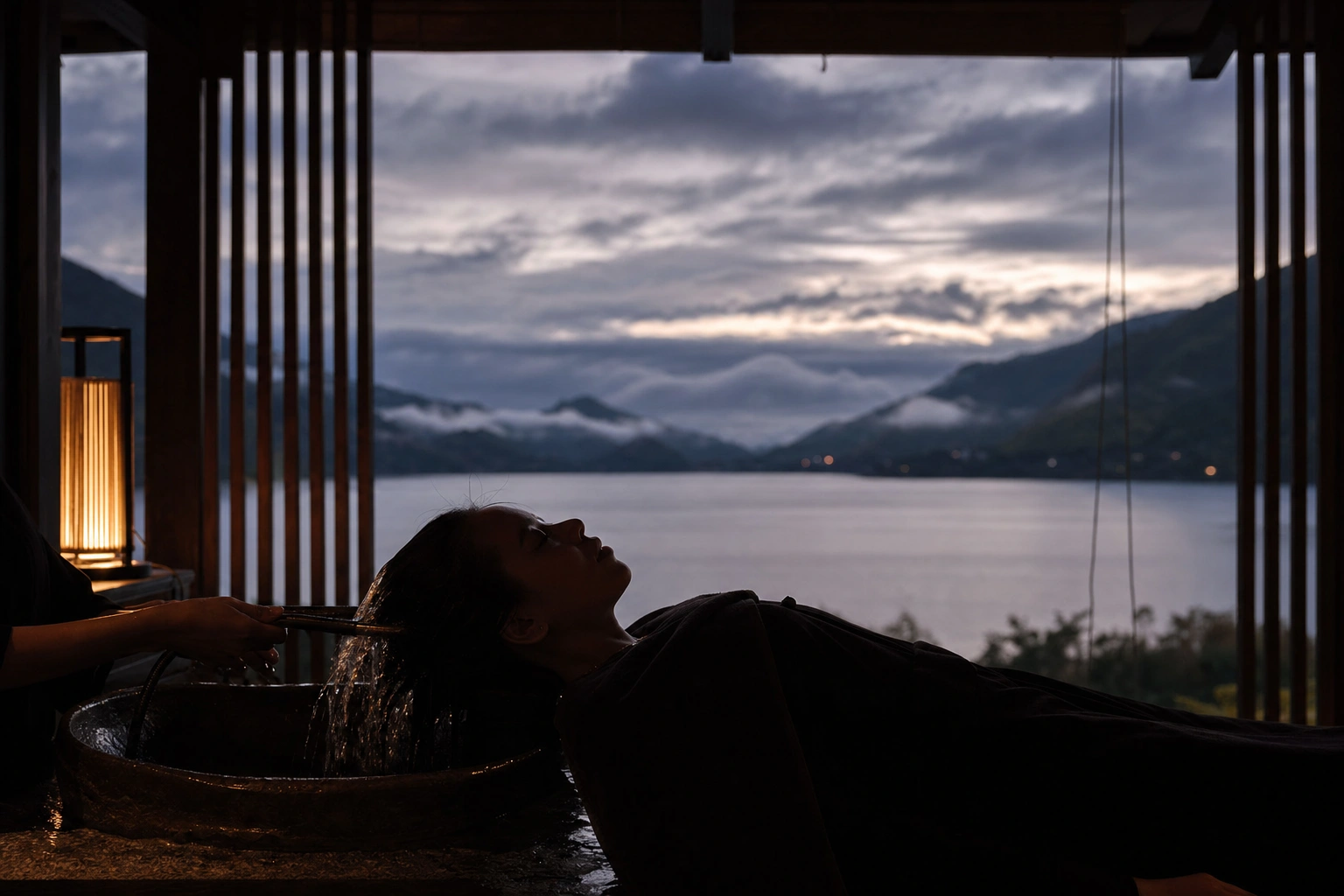
The Japanese format grew out of salon culture and is built as a sensory experience. Sessions lean dark, quiet, and unhurried. The signature moments are tactile: the warm-water halo (a slow, even pour that settles over the crown), micro-mist steam that loosens buildup without scrubbing, and long, methodical massage sequences that treat the neck and shoulders as part of the scalp. There is a reason regulars describe the middle third of the hour as the closest thing to sleep while awake.
Treatment products appear, but they serve the ritual — the massage is the product. Our Japanese head spa guide walks the full sequence in detail.
The Korean approach: the clinic
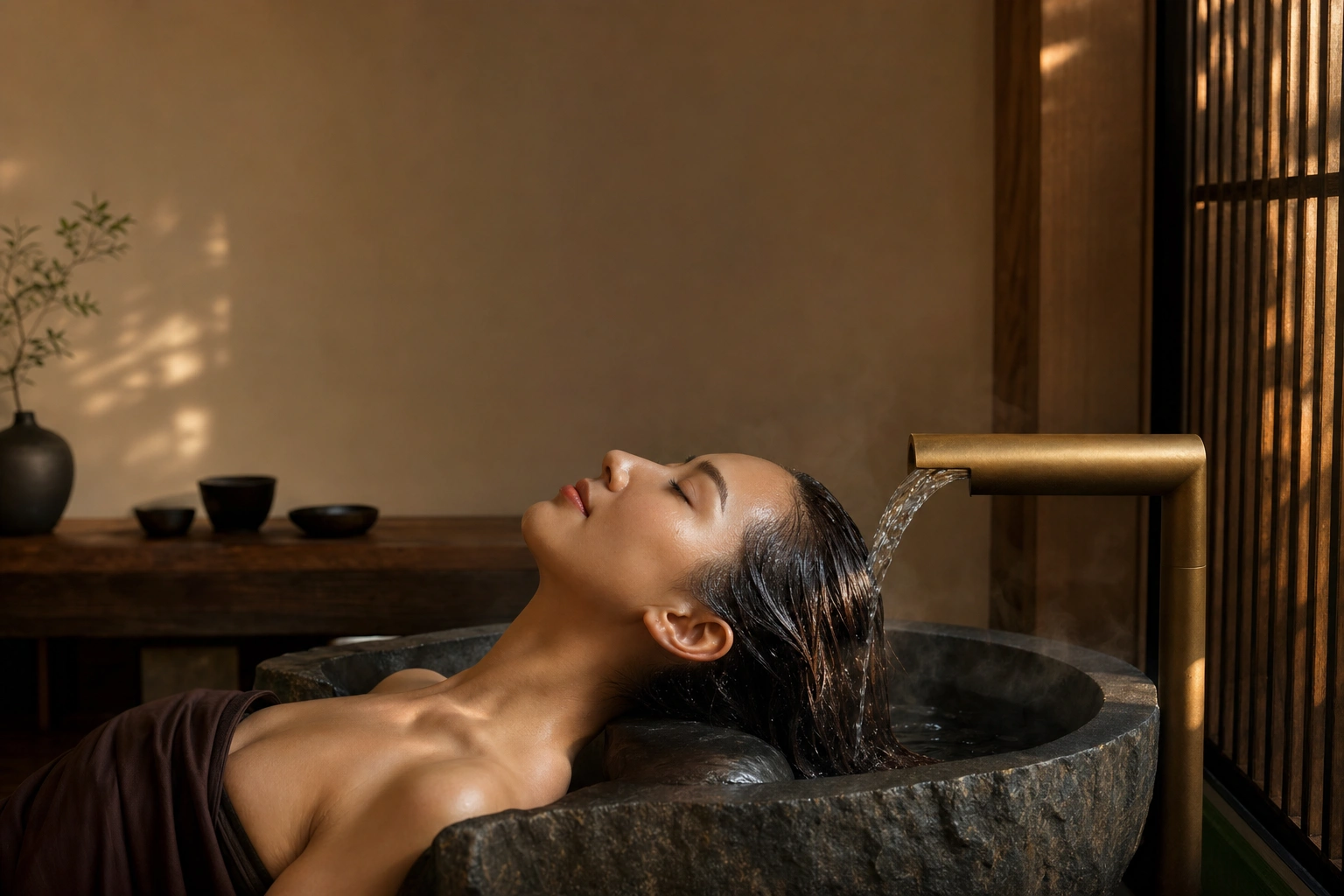
The Korean format arrives from skincare culture and runs like a facial for the scalp. The session typically opens with a scalp analysis — magnified imaging of the scalp surface — and what it shows drives everything after: the strength of the exfoliation, the treatment products, and the advice you leave with. Expect scaling (a peel-style exfoliation of the scalp), a deep cleanse in the spirit of a scalp detox, and a second look at the scalp on the way out to show the difference.
It is the natural fit for concern-driven visits — guests managing dandruff or an oily scalp tend to get more from a protocol built on what the camera shows than from relaxation alone. The same rule from every wellness surface applies here: a head spa manages comfort and condition, it does not treat disease. Persistent symptoms belong with a dermatologist first.
The differences at a glance
The Japanese
The Korean
Session centers on
The massage ritual
The scalp's condition
Opens with
A brief consultation
A magnified scalp analysis
Signature elements
Warm-water halo, micro-mist, quiet
Scaling, matched products, before/after imaging
You leave with
Deep relaxation
A read on your scalp and a protocol
Book it for
Stress, tension, rest
A specific scalp concern
The Japanese
Session centers on
The massage ritual
Opens with
A brief consultation
Signature elements
Warm-water halo, micro-mist, quiet
You leave with
Deep relaxation
Book it for
Stress, tension, rest
The Korean
Session centers on
The scalp's condition
Opens with
A magnified scalp analysis
Signature elements
Scaling, matched products, before/after imaging
You leave with
A read on your scalp and a protocol
Book it for
A specific scalp concern
Choosing between them
In practice, the choice is rarely pure — most American spas blend both traditions, and the menu tells you more than the flag. Read the listing for what the session actually includes, then check how it scores on technique and sanctuary in our directory. If you are still deciding what to look for, start with how to choose a head spa.
Asked & answered
What is the difference between a Japanese and a Korean head spa?
A Japanese head spa centers a sensory relaxation ritual — warm water, massage, quiet. A Korean head spa centers scalp health, typically opening with a scalp analysis and building the session around what it shows.
Do Korean head spas include a scalp analysis?
Usually. A magnified before-and-after look at the scalp is the signature Korean element, and it drives which exfoliation and treatment steps follow.
Which should I try first?
Book Japanese if your goal is rest and tension relief. Book Korean if a specific scalp concern is the reason you are going. Many U.S. spas blend both, so read the menu over the label.
Before you book
Quality varies more than the photos suggest. Every listing in the Atlas is scored on technique, sanctuary, hygiene, and value — independently, never paid.
Further reading